Fast Answer: Hotel linen color consistency means every towel, sheet, and pillowcase in a batch matches the same shade within an acceptable tolerance, usually a Delta E value under 1.0. Inconsistency comes from dye lot variation, uneven fabric preparation, or a skipped lab dip approval. It is prevented through colorfastness testing, dye lot tracking, and pre shipment inspection.
Why Color Inconsistency Happens in Hotel Linen
Buyers usually notice the problem after the order arrives. One carton of towels looks a shade warmer than the last shipment, or a batch of sheets carries a faint yellow undertone that was not in the original sample. This is almost never a random accident. It traces back to one of four points in production.
The first is dye lot variation. Every time a mill mixes a new dye bath, even with the exact same recipe, small differences in water temperature, dye concentration, and dyeing time create slightly different results. Fabric dyed on one date and the same fabric dyed three weeks later for a reorder can carry a visible shade difference, even if both technically pass a colorfastness test.
The second is fiber and yarn inconsistency. Cotton grown in different regions, or even different bales from the same region, absorbs dye slightly differently because of natural variation in fiber maturity. This matters more for 100 percent cotton hotel toweling at 400 to 600 GSM than for polycotton blends, since natural fiber takes dye less uniformly than synthetic fiber.
The third is finishing and mercerization differences. Mercerized cotton takes dye deeper and brighter than unmercerized cotton of the same fiber content. If a mill switches finishing steps between production runs without telling the buyer, the color will read differently even from an identical dye formula.
The fourth, and the one buyers can actually control, is a skipped or rushed lab dip approval stage. A lab dip is a small dyed swatch the mill sends before bulk production for the buyer to approve against a Pantone reference or a physical shade card. Skipping this step to save five to seven days is the single most common cause of color complaints Twil Tex sees from new hotel linen buyers.
Does Thread Count or Fabric Type Affect Color Consistency
Yes, but not in the way most buyers assume. Thread count itself, whether 200TC or 400TC, does not change how well a fabric holds color. What matters is fiber type and weave density. A tightly woven percale sheet at 225TC holds a dyed color more evenly than a loosely woven fabric at a higher thread count, because looser weaves scatter light differently across the surface and can look patchy even with identical dye. Cotton polyester blends generally show better batch to batch color stability than 100 percent cotton, since polyester fiber is more chemically uniform and takes disperse dye more predictably than natural cotton takes reactive dye. For hotels matching bedding across a 150 room property over several years of reorders, a 60 percent cotton 40 percent polyester blend is often the more forgiving choice for long term shade matching, even though 100 percent cotton is usually the premium choice for feel.
How Color Fastness Is Measured in Hotel Textiles
Color fastness testing checks how well a color holds up under real world stress: washing, rubbing, light, and water. It does not measure whether two batches match each other. It measures whether a single batch will stay the same color after 20, 50, or 100 industrial wash cycles. Two testing bodies cover almost all of the standards used in hotel textile sourcing, AATCC and ISO.
|
Test Standard |
What It Measures |
Common Method |
Typical Hotel Linen Requirement |
|
AATCC TM61 |
Colorfastness to laundering |
Accelerated wash simulating multiple commercial washes |
Grade 4 or higher on the AATCC gray scale |
|
AATCC TM8 |
Colorfastness to crocking (rubbing) |
Crockmeter test, dry and wet rubbing |
Grade 3.5 or higher, especially for dark towels |
|
ISO 105 C06 |
Colorfastness to domestic and commercial laundering |
Single or multiple wash cycles up to 70°C |
Grade 4 minimum for hospitality contracts |
|
ISO 105 B02 |
Colorfastness to artificial light |
Xenon arc lamp exposure |
Grade 4 minimum for linen near windows or poolside |
Twil Tex requests AATCC or ISO test reports directly from the mill's in house lab or a third party lab before confirming bulk production on any dyed or printed hotel linen order, not after. On some programs we also reference OEKO-TEX STANDARD 100 limits alongside colorfastness data, since dye chemistry and harmful substance limits are tested together in most accredited labs.
How to Ensure Linen Batches Match Across Reorders
Matching a reorder placed 18 months after the original order is harder than matching two batches produced back to back. Three controls make this realistic instead of a guessing game.
Lab dip approval on every reorder, not only the first order. Even if the fabric spec has not changed, Twil Tex sends a fresh lab dip against the original approved swatch for any reorder placed more than 90 days after the last production run. This typically adds 5 to 7 days to the production timeline but avoids a full batch rejection later.
Dye lot tracking with a retained physical reference. A signed and dated swatch from the original approved bulk dye lot is kept on file, not just a digital photo, since screen colors and printed colors both shift from the physical fabric.
Delta E measurement at inspection. During Final Random Inspection, a spectrophotometer reading compares the new batch to the retained reference swatch. A Delta E value of 1.0 or below is generally accepted as visually indistinguishable to the human eye under normal hotel lighting. Anything above 2.0 is flagged and typically rejected before shipment.
What Is the Standard Procedure for Linen Quality Control Before Shipment
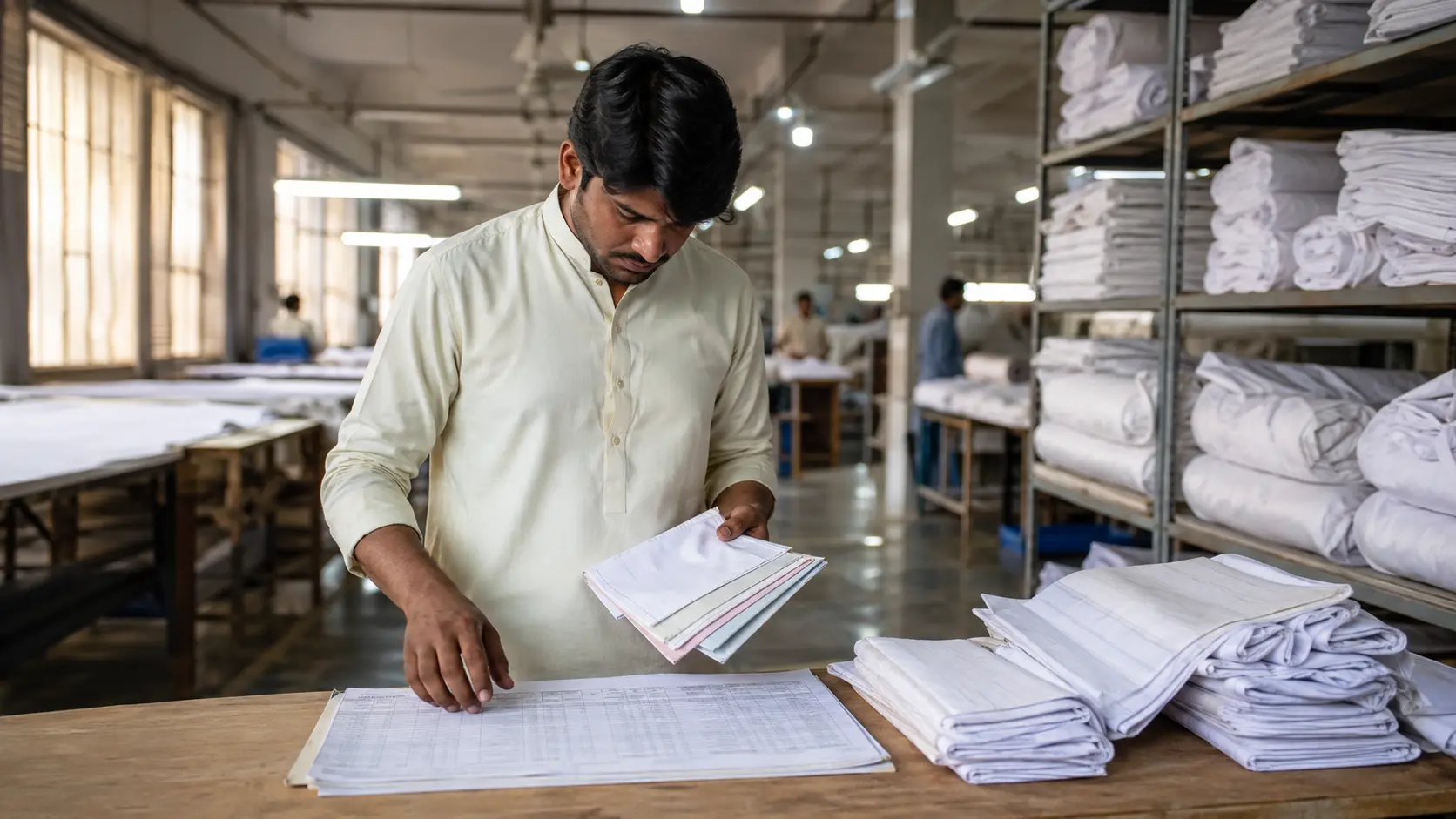
Twil Tex runs Final Random Inspection, commonly called FRI, on 100 percent of hotel linen orders before they leave Pakistan, and this is where color problems get caught before they become a customer's problem instead of a mill's problem. The process follows four steps.
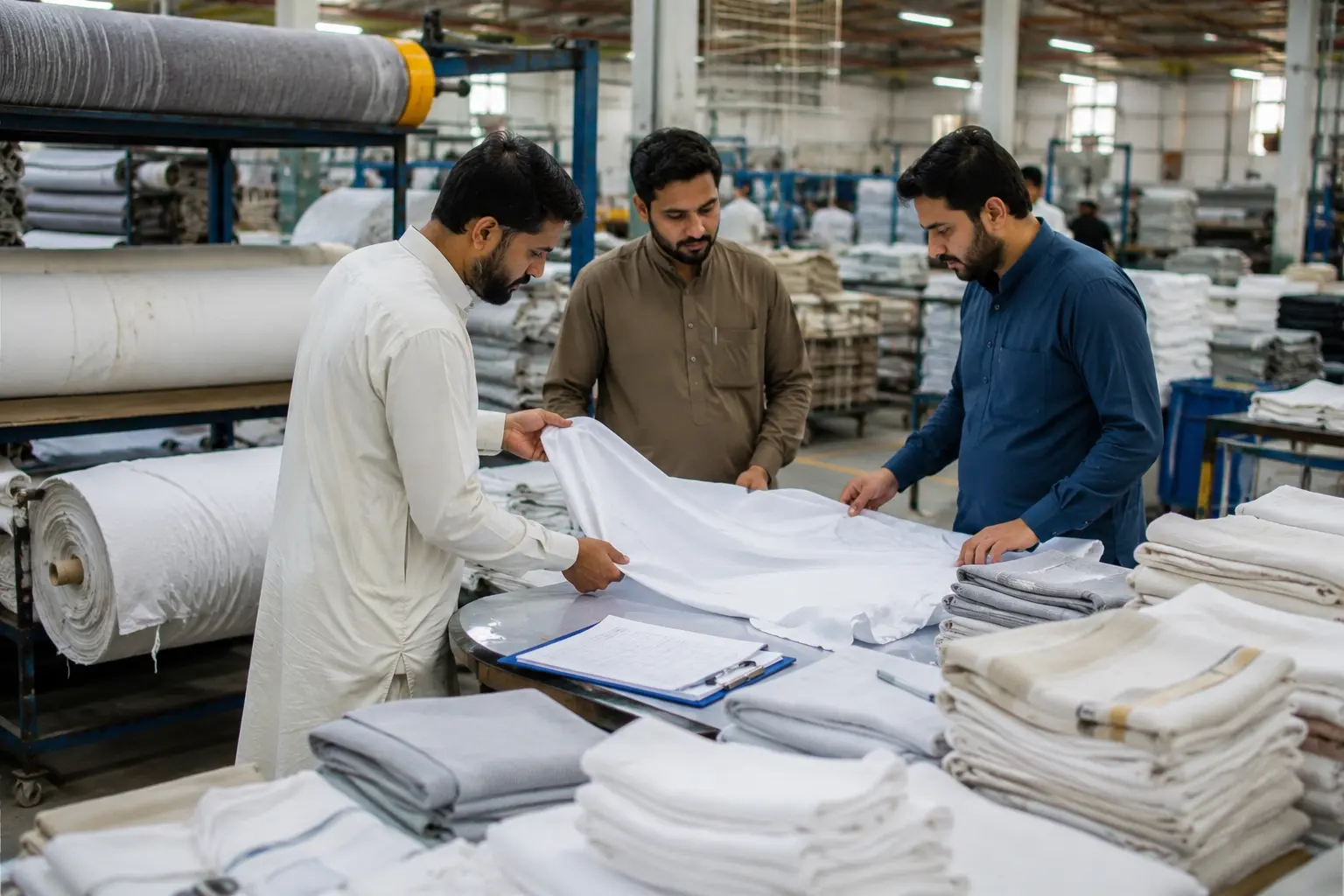
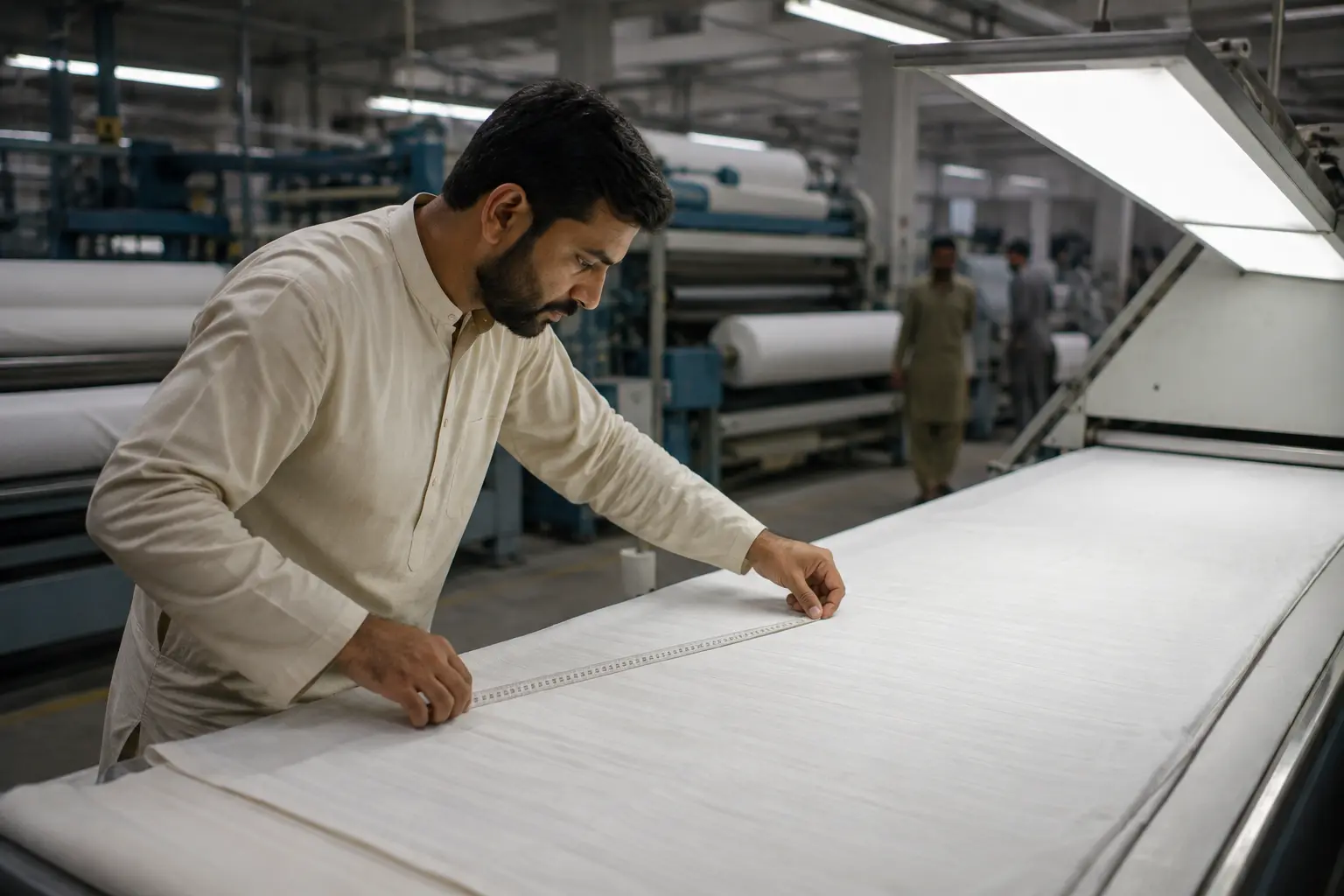
First, an AQL 2.5 sampling plan is applied, meaning a statistically representative sample is pulled from the finished, packed cartons rather than from goods still on the production line. Second, each sampled piece is checked against the approved lab dip and the retained physical swatch under standard D65 daylight simulation lighting, not factory fluorescent lighting, which can visually shift a color by a full shade. Third, GSM, dimensions, and stitching are checked alongside color, since a supplier under deadline pressure sometimes lets one quality dimension slip while focusing on another. Fourth, a written inspection report with photos is shared with the buyer before the shipment is authorized to leave the factory, typically 3 to 5 days before the vessel or flight booking.
This inspection step sits inside the broader production process Twil Tex manages for every order, from spec sheet lock to final shipment, covered in more detail in our guide on how wholesale textile sourcing from Pakistan actually works.
Why Hotel Towels Fade After Repeated Washing
Fading after washing is a different problem from a batch mismatch, and it usually comes down to one of three causes. High temperature commercial laundering above 70°C breaks down dye bonds faster than the 40 to 60°C cycles used in a home washing machine, which is why a towel that looked fine in a home wash test can fade visibly after 40 to 50 commercial hotel laundry cycles. Chlorine bleach, still used by many commercial laundries for whites and light colors, is aggressive on any dyed or printed accent trim. And incomplete dye fixation during the original dyeing process, meaning the dye was never fully bonded to the fiber, shows up as fading that happens unusually fast, often within the first 10 to 15 washes rather than gradually over a year. This is exactly what AATCC TM61 and ISO 105 C06 testing are designed to catch before the goods ship, which is why skipping that test report to save time on a rush order is a false economy.
How Often Should Hotels Replace Faded Linen
Most hospitality operators work on a lifecycle of 150 to 200 commercial wash cycles for bath towels and 200 to 250 wash cycles for bed sheets, typically a 12 to 18 month replacement cycle for a mid volume property running at 65 to 75 percent occupancy. Visible color fading, rather than the calendar, should be the actual trigger. Once a towel has faded enough that a new batch placed next to it in a folded stack shows a visible line, most hotel brand standards call for retirement regardless of remaining physical durability, since the guest facing appearance has already failed even if the fabric itself has years of life left.
Best Practices for Consistent Hotel Linen Color
Request a physical lab dip swatch before every bulk order and every reorder, never approve from a digital photo alone. Ask the supplier for AATCC or ISO test reports as a standard part of the quotation, not as an added cost after the fact. Keep a signed reference swatch on file for any color used across multiple properties or multiple years. Specify the Delta E tolerance in the purchase order itself, for example Delta E 1.0 maximum, rather than leaving shade matching to a verbal understanding. Build a 5 to 7 day lab dip cycle into the production timeline from the start instead of treating it as an optional step that gets cut when deadlines tighten.
Frequently Asked Questions
What causes color inconsistency in hotel linen?
It is mainly caused by dye lot variation between production runs, natural fiber differences in cotton, changes in mercerization or finishing between batches, and skipped lab dip approval before bulk production begins.
How is color fastness measured in hotel textiles?
Through standardized lab tests such as AATCC TM61 and ISO 105 C06 for washing, and AATCC TM8 for rubbing, each producing a numerical grade that shows how much a color changes under simulated wear.
Does thread count or fabric type affect color consistency?
Thread count alone does not affect color holding. Fiber type and weave density do. Cotton polyester blends generally show more stable batch to batch color than 100 percent cotton.
How can hotels ensure linen batches match in color?
By approving a fresh lab dip on every reorder, keeping a retained physical reference swatch on file, and measuring Delta E against that reference during pre shipment inspection.
What is the standard procedure for linen quality control before shipment?
An AQL based random sample is pulled from finished, packed goods and checked for color match under standardized daylight lighting, along with GSM, dimensions, and stitching, with a written report shared before the shipment is released.
Why do hotel towels fade after repeated washing?
High temperature commercial laundering, repeated chlorine bleach exposure, and incomplete dye fixation during the original dyeing process are the three most common causes.
How often should hotels replace faded linen?
Most properties plan on 150 to 200 wash cycles for towels and 200 to 250 for sheets, roughly a 12 to 18 month cycle, though visible fading next to a newer batch is usually the real trigger for replacement.
Get Your Color Match Right the First Time
Color mismatches are expensive to fix after the fact, both in reshipping costs and in the guest facing appearance of your property. Twil Tex manages lab dip approval, dye lot tracking, and Final Random Inspection on every hotel linen order we source, so the batch that leaves Pakistan is the batch you actually approved. If you are placing a first order or a reorder and want a supplier that treats color consistency as a checkpoint rather than an afterthought, get in touch with our sourcing team at twiltex.com and tell us about your current linen program.